

Owlya is an AI-Powered proctoring platform that helps brands conduct seamless online assessments and maintain the integrity of exams.
They develop several tools and features that help proctors create assessments, streamline their workflow, automatically schedule tests in batches, and send them automated reports at the end of every online exam.
Objective
I had worked at Owlya for two years as a Content Strategist when they launched their study app, QuizDash.
This app was specifically designed for high school and undergraduate students in Canada and the USA. Hence, they needed someone who knew how to market products to a younger demographic. The primary objective was to increase downloads and subsequently establish a Campus Ambassador program.
Problem
Owlya is a pure tech company run by software developers; they didn’t have a marketing department, which is why the founder approached me to handle the app launch process. QuizDash did not have a marketing team, so I reached out to Tech Cabal and influencers in the education space.
process
The first thing I did was to start a campaign for the launching of QuizDash. The app was still under construction and they wanted me to start posting on Instagram, TikTok, LinkedIn, Twitter, and Facebook as a way to foster engagement, and create some buzz around it.
The product campaign was broken into four core parts; post regularly on social media to grow awareness, contact social media influencers in the education space, reach out to university students in St. John’s, Newfoundland to test the app, and start up a Campus Ambassadorship program.
Social Media Posting
The social media section of the product started with me hosting weekly QuizDash campaign meetings on Google Meet, months before the app was officially launched. The founder, the graphics designer, and I brainstormed strategy and post ideas for the app launch. On the call, I provided updates on content and competitor research, gave reports on the previous social media posts and shared any issues hampering
progress, while we worked on a solution.
I created a social media calendar and developed a social media strategy focused on promoting the app’s features and usage, via influencer partnerships, media coverage, and campus outreach programs to onboard smart students for our Student Ambassadorship program.
I collaborated with the in-house graphic designer to create catchy graphics and branded content for QuizDash social media pages.
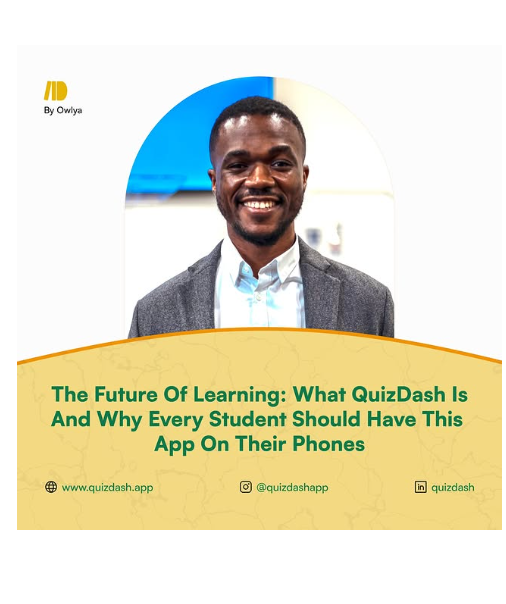
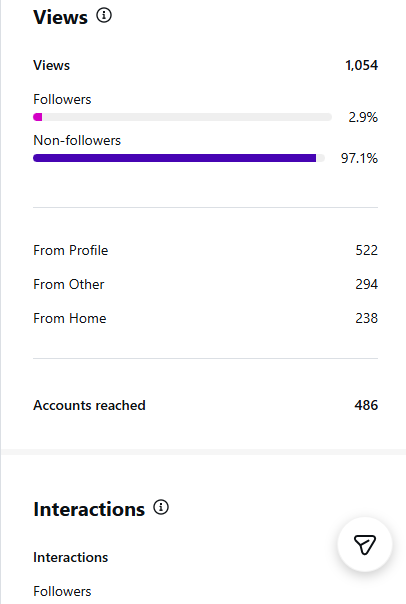
I wrote the script for a founder interview post, where the CEO of Owlya, Chukwuebuka Amaefula, shared his vision for QuizDash and how the app would improve the lives of students. That post had one of the highest numbers of engagements we got pre-launch. It has 486 account visits and 1,054 views on Instagram. That post started conversations surrounding the app on LinkedIn, with most industry professionals in the Edtech space showing interest in Genesis, Aiti NG.
Media and Influencer Partnerships
Most of the marketing strategies and ideas that I developed for this project relied heavily on external promotion and assistance. We needed a few influencers to partner with for content and a media house to promote us, two resources I scouted for:
Before QuizDash, Owlya was already in talks with Tech Cabal to secure a promotion for its AI-Proctoring software. Since we already had their attention, we decided to use their services for QuizDash instead. I sent emails and hosted a meeting with the Team at Tech Cabal to give us a spot on their website and Zikoko’s social media pages. They also pitched us a table at MoonShot by Techcabal. They wanted the founder to appear in Zikoko’s My Startup in 60 seconds, too.
Next, reached out to several influencers who create educational content to work with QuizDash as promoters and student ambassadors. I successfully collaborated with two popular TikTok influencers in the educational space to promote the app to their dedicated followers. We worked with Dr Sarah Rav from Australia and Ms Bukola from Nigeria.
The video Dr Sarah Rav shot for QuizDash, showing her followers how the app works, got QuizDash over 500 views on the company’s Instagram profile. It also increased app downloads from 10 to 100+ downloads on the Play Store.
Campus Ambassadors Program
When the founders of QuizDash wanted to develop the app, one of the ways they came up with to promote it was to start a Campus Ambassador Program, which would allow university students to earn rewards and recommendations from the company by promoting the app on their campus. The final phase of the launch project was to start a Facebook campaign to attract sign-ups from interested students. This is what I did:
Wrote an AD copy to introduce QuizDash’s Campus Ambassador program, and set up a Meta Ad which was promoted on Facebook and Instagram.
The aim of this Meta Traffic Campaign was to engage the most influential students from various universities in promoting QuizDash on their campuses.
In the copy, I reiterated the incentives participants would receive, which are a professional recommendation letter for jobs and further studies, premium access to the app’s features, use of the most advanced functions, a certificate of completion, an opportunity to build their portfolio, and start a career in Influencer Marketing.
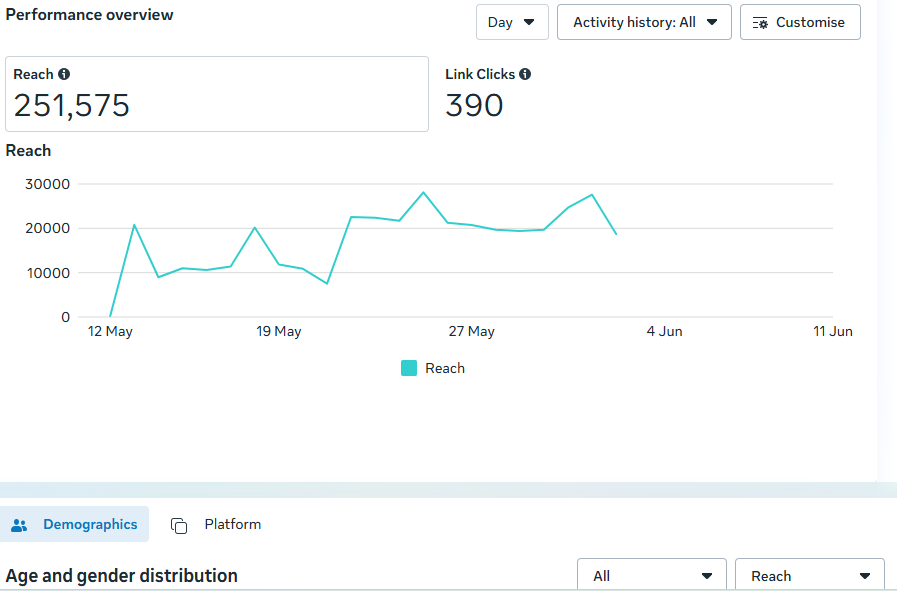
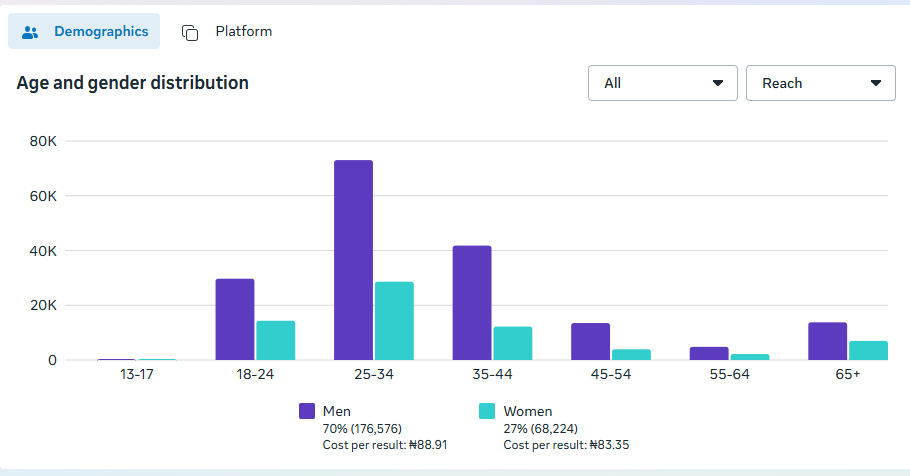
The campaign targeted undergraduate students in Canada, the US, Australia, Ghana, Nigeria and generated over 176,941 views and reached 251,575 people. It ran for one month. Initially, we wanted the ad to target Canada and the US, but decided to expand it because we believed Ghana and Nigeria would give us the largest number of sign-ups.
results
A few of the strategies I presented for QuizDash were successful. Ms Bukola’s video gained the attention of her followers in Nigeria. Dr Sarah Rav’s video increased the number of downloads within the week it was posted. The two results impressed our clients, leading them to offer a retainer contract for creating branded content for us.
The founder’s video also generated significant engagement, particularly on LinkedIn, attracting interest in the app. Given the success of that post, we decided to focus more on videos featuring real students who have used the app.
Struggles I had along the way, hurdles, different possibilities the client could have taken
The Meta Traffic Campaign I set up for QuizDash reached 251,575 people, but it only got 390 link clicks and out of that number, only 13 people actually filled in the form we put on the website. That strategy wasn’t as much of a success as I had hoped, and there are things that, looking back now, I could have done differently:
I have started with an awareness campaign first, powered by videos of students reacting to or using the app. The company could have also spent more time building an online community of loyal students, who we had put in possibly a Slack Channel and interacted with regularly, rather than throwing generic content at them.
Our content should have been more of user-generated content; time spent designing posts about how services work could be shared between doing that and sharing stories about students in the USA and Canada, and struggles they face while taking exams, how they are settling into school life, and how incorporating the QuizDash app into their daily routine lessens that burden.
We focused too much on influencers who had their attention split between too many brands, which were also our competitors, while we could have used regular university students who faced the exact struggle we were trying to solve.
The student influencer we found had an incredibly high rate that we as a startup couldn’t afford. One of the influencers we paid for collaboration could only deliver on one video out of four we agreed on; she cited her TikTok account having issues as the reason she couldn’t follow through on our initial agreement.
For QuizDash, I can say that I had the right idea of how the marketing for this product could have been marketed, and so did the founder. But as a small company, our resources were already spread too thin, and with only the founder staying in Canada, there was no way we could mobilise an on-ground team to go into campuses to host those outreach programs.
We also didn’t have the budget to pay for events that would have given us exposure, like Tech Cabal’s Moonshot. Our strict budget meant we could only afford to spare money on either influencers or Tech Cabal; we couldn’t realistically do both at once.